Who Were We and Who Will We Become?

Hi and Welcome! This is the third issue of Palimpsest of Flesh. As I've gotten really into the research (and grant requests!) for my next book, Warriors, Wanderers, and Weavers: The Real Story of Our Female Ancestors, I've been thinking quite a bit about how I can relate to the people who lived 1,000, 5,000 or 10,000 years ago. What do we have in common? What's completely different? This month's essay explores one aspect of that idea. At the bottom of the newsletter are some of my most recent pop-culture faves from pods to film, and my work that has come out over the past month.
Corpus:
The living body of this issue (a thought lab for my writing; aka the essay).
On watching, looking, and seeing each other
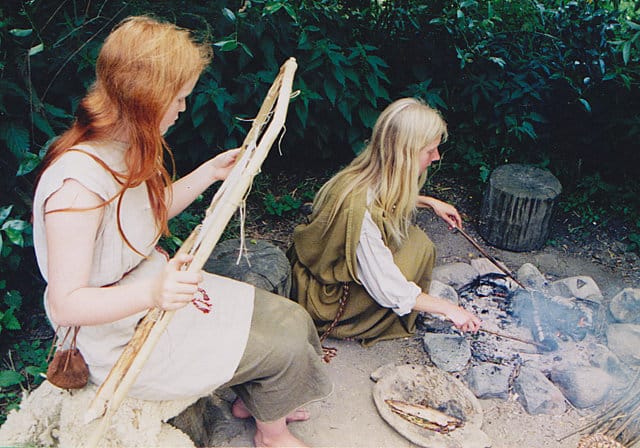
Like Narcissus*, but not as hot, most of us see ourselves dozens of times a day. In the mirror as we blearily wash the sleep from our eyes, on a too-long Zoom call, in another mirror as check our makeup, again full-length as we exit the bathroom. We walk past windows that show our too-hunched form, and check our teeth in the a butter-knife's flash.
We are reflected in selfies as we take them, then again when we edit or delete—and forever after if we post it on our grid....where it might make its way to someone else's grid. A fun-house mirror of our images, except without the fun part. And perhaps we face ourselves yet again, if we commit the ultimate online masturbatory act of Googling ourselves.
We were never supposed to see our own faces this much Lola Christina Alao wrote in a viral essay. HELL YES was my immediate thought.
Until very, very recently, we didn't have the opportunity for so much self-scrutiny. Even I remember at time when a mirror above the sink was the only regular reflection I saw in a grade-school day (and occasional photos that took a week to print). I grew up running around the woods, paying attention to my hair and clothes at the beginning of the day as I prepared for school, and at the end as I brushed my teeth.
And I was a kid who was into my clothes, as my grandma liked to sew outfits and I loved choosing fabrics for them—but that was about creating something I thought was both pretty and functional for those woods-romps (something I still value today as I often hike in skirts!), but importantly NOT about how I looked in it.
Even the mirror was a pretty recent invention and how much it impacted our self-understanding is probably underestimated. As Alao writes in her essay:
Before mirrors were invented, the earliest type of “mirror” used was nature – reflections in ponds, lakes and rivers when waters were calm enough to reveal a flat surface. But even then, we had never truly “seen” ourselves and, because of this, we had a very different concept of who we were.
In his book Millennium: From Religion to Revolution: How Civilisation Has Changed Over a Thousand Years, author Ian Mortimer argues that before the invention of the mirror, the concept of individual identity that we have today didn’t exist. “The development of glass mirrors marks a crucial shift, for they allowed people to see themselves properly for the first time, with all their unique expressions and characteristics,” he writes.
What IS all that looking is doing to our self-image? Social neuroscientist Antonella Tramacere asked exactly that in her 2022 research paper: Face Yourself: The social neuroscience of mirror-gazing. "What happens when we perceive our own self? What do we do, for example, when we look at our own face?"
The answer is that we start to see ourselves as others perceive us from outside, rather than from the inside, Tramacere writes.
Through mirrors, we can perceive the visible aspects of our own face and body as others can see them and acquire an externalized perspective on ourselves. The mirror image is an objectified representation of ourselves and allow seeing us as through the gaze of an another.
We did not evolve over the past 100,000 years that we've been homo sapiens sapiens (modern humans) to understand ourselves through other people's eyes. This is new for us humans—And mirrors were only just the start. Research from psychologists at the University of Illinois looked at how self-concept is affected by seeing ourselves during video calls.
“We used eye-tracking technology to examine the relationship between mood, alcohol and attentional focus during virtual social interaction,” said Talia Ariss, a University of Illinois Urbana-Champaign doctoral candidate who led the research with psychology professor Catharine Fairbairn. “We found that participants who spent more time looking at themselves during the conversation felt worse after the call, even after controlling for pre-interaction negative mood. And those who were under the influence of alcohol spent more time looking at themselves.”
The findings add to previous studies suggesting that people who focus more on themselves than on external realities – especially during social interactions – may be susceptible to mood disorders, Ariss said.
“The more self-focused a person is, the more likely they are to report feeling emotions that are consistent with things like anxiety and even depression,” she said.
All this self-staring has had negative effects both on mental health, as mentioned above, and, I'd posit, led to the boom in cosmetic surgeries we've seen recently. It's not just the old nose jobs and eyelifts, but more extreme procedures like buccal fat removal, whole-face upgrades, and constant surgical tweaking to the extreme that many of those who can afford regular visits to the plastic surgeon, are now looking eerily similar, what I've called AI face.
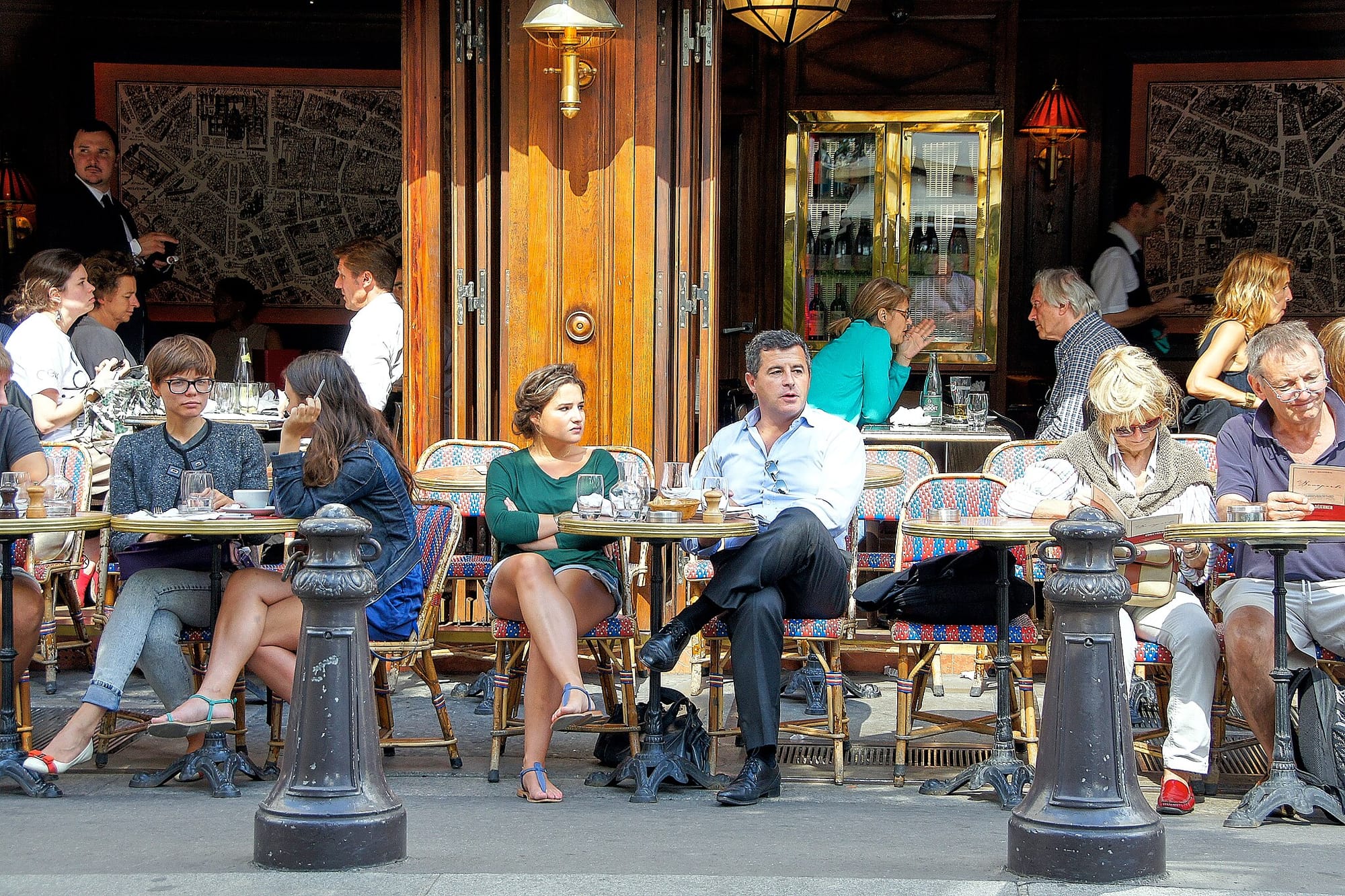
At the same time as we've become more self-obsessed than ever, we're looking at those around us less.
"We used to be looked at. And we used to look at everybody. We used to sit on a subway and look at people. We used to be on a plane and look at people. We used to walk the streets. We are looking at people and people are looking at us less and less. There's a paucity of eye contact and a paucity of basically taking in the world visually," said famous couples therapist Esther Perel on the Fashion Neurosis pod.
But for most of human history, it was the other way around: we used to watch others all the time and rarely see ourselves.
And we watched the rest of the world much more too, not just our fellow tribespeople. We looked for the fruit on the bush, the tiny mushroom that signals a hearty, delicious root beneath, or the soft smush of the deer hoof in the almost-dry mud.
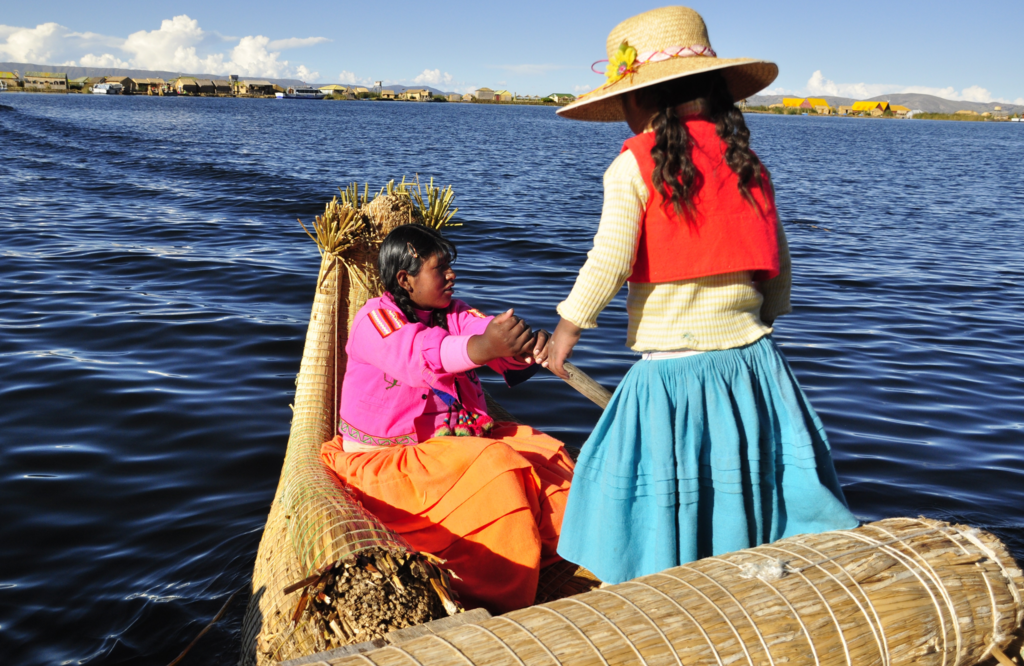
We learned to navigate wide oceans because we tracked the stars so carefully, and taught our kin to do the same, building on knowledge over generations. Those wide waters, and wider skies, watched with a discerning eye, told of of things we are fully blind to today. Islands can, a few people still know, affect wave and current patterns 20 miles away, if you know how to see, and feel, the salty seas move beneath your canoe.
Our ancestors saw worlds of things we cannot, because we are busy staring at our faces, and counting the crows' feet, worrying the sag in our chins with a forefinger that once would have been held to the wind, and provided detailed meteorlogical reports, paired with shifting trees' leaves, or the angle of a gull's wing.
All that human talent for watching, honed over thousands of years—to understand the stars, how fish move in the current, where to put our feet to traverse a rocky landscape. All of it is wasted as we stare at our faces, more strange than ever to ourselves for all that looking.
Could we go back? What would it look like if we did?
Anconeus* Archive
Small but mighty notes — contractions of thought, brief flashes of muscle memory.
*The Anconeus Muscle is a tiny connector between the arm’s upper humerus and lower ulna which allows elbow extension.
HEAR IT
I'm really loving the Fashion Neurosis podcast with Bella Freud. Aside from the excellent interview with Esther Perel that made it's way into my essay, above, I had so much fun listening to Bella chat with HBC (Helena Bonham Carter to those who don't have a parasocial relationship with her), one of my favorite actors of all time. I listen to the pod on long walks or runs, but you can also watch it as a vodcast:
My latest pod interview just dropped! The fab @toughgirlchallenges Pod; I really love speaking with such amazing women (all have been women so far!) who are putting out these incredibly inspirational pods. It's just a beautiful thing to be a small part of!
SEE IT
I've been working my way through the films of Lynn Ramsay (as a devoted listener to the Blank Check podcast; they just featured her as the director), and wow, I feel like I've found a friend-in-vision—someone whose eye feels very close to my own.
Ramsay's latest film is Die My Love (with JLaw and Pattinson and I loved it), and her first film was Ratcatcher, which I haven't seen yet. But her second film. OH, her sophomore offering is one of those that has become a cult classic since its debut in 2002 for a reason—it's incredibly good and dark and funny and weird, fantastical and dreamy, but completely cohesive as a story.
Samantha Morton plays Morvern, a Scottish grocery-store worker who literally takes the bull by the horns when her life offers up a cruel twist. This is a completely female-centered movie (spoiler revealed by the trailer, below; Morvern's boyfriend starts the movie off dead) which is a too-rare and beautiful thing, and it reminded me very much of my own 2002, in the strangeness that is being that age.
AND THE SOUNDTRACK!
READ IT
This piece on Jezebel about how we could have had rolling suitcases if not for sexism and toxic masculinity just blew my mind. I remember as a kid in the 1980s, traveling with my grandma, who had a little folding cart that she put our suitcases on. Which was the workaround for a single grandma traveling with her granddaughter because, according the Jezebel piece, we shouldn't have been traveling without a man, I guess.
“Two assumptions about gender were at work here. The first was that no man would ever roll a suitcase because it was simply “unmanly” to do so. The second was about the mobility of women. There was nothing preventing a woman from rolling a suitcase – she had no masculinity to prove. But women didn’t travel alone, the industry assumed. If a woman travelled, she would travel with a man who would then carry her bag for her. This is why the industry couldn’t see any commercial potential in the rolling suitcase. It took more than 15 years for the invention to go mainstream, even after Sadow had patented it.”

It's amazing how sexism can sneak into your life in the stupidest ways.
Hot Off The Presses
After an incredible rush of articles following the publishing of The Stronger Sex, I took a month to get into the research phase for my next book, so I have but one piece of mine to share, but it's a really great one, because it's an issue long close to my heart, which became a feature & cover story for New Scientist!
BMI, originally a population-health tool, has been mangled & misused to shame & misdiagnose. I've personally been harmed - told by a doc I was overweight so I radically restricted food to lose it and "be healthier." All I did was lose muscle & feel very ill.
I wrote abt my body, the recent Lancet review of the subject and new recommendations, AND BMI alternatives—which can help determine actual body fat and location which is what DOES affect one's health, not just weight.
Thanks so much to the incredible expertise of Sonia Anand, Diana Thomas, Naveed Sattar and Francesco Rubino who weighed in (pun intended!) on this subject for this piece. I love getting to speak to these brilliant scientists—best part of my job!